Spondylodysplastic EDS
Last reviewed: 2026-06-09
Spondylodysplastic Ehlers-Danlos Syndrome (spEDS) is a rare connective tissue disorder caused by changes in the B4GALT7, B3GALT6, or SLC39A13 gene, which affect how the building blocks of connective tissue are assembled. Its defining features are short stature, bowing of the limbs, and distinctive craniofacial features, reflecting effects on bone and skeletal development. People with spEDS also commonly have joint hypermobility, low muscle tone, skin abnormalities, hyperopia (farsightedness), and a range of multisystem findings. spEDS is inherited in an autosomal recessive pattern, so a person must inherit a change in both copies of the relevant gene to be affected.
Genetics & Inheritance
B4GALT7, B3GALT6, or SLC39A13
Caused by mutations at specific locations in BOTH copies of B4GALT7, B3GALT6, or SLC39A13
Signs & Features of spEDS
Craniofacial features
Spondylodysplastic EDS can be associated with characteristic facial features. Reported features include prominent or wide-set eyes, a flat midface, and other subtle differences in facial shape. These vary between the genetic subtypes and between individuals.
Short stature
Short stature means a height noticeably below the typical range for age. It is a consistent feature of spondylodysplastic EDS, where the growth of the bones and skeleton is affected. The degree varies between people and between the genetic subtypes.
Mild craniofacial surface abnormalities
Joint hypermobility
Joints that move well beyond the normal range, affecting many joints throughout the body rather than just one or two. In the rare EDS types this is present from birth and is often severe, contributing to joint instability, pain, and frequent sprains.
Bowing of limbs
Bowing refers to a curved shape of the long bones of the arms or legs, rather than a straight one. In spondylodysplastic EDS it reflects the altered growth and structure of the bones. The degree of bowing varies between individuals.
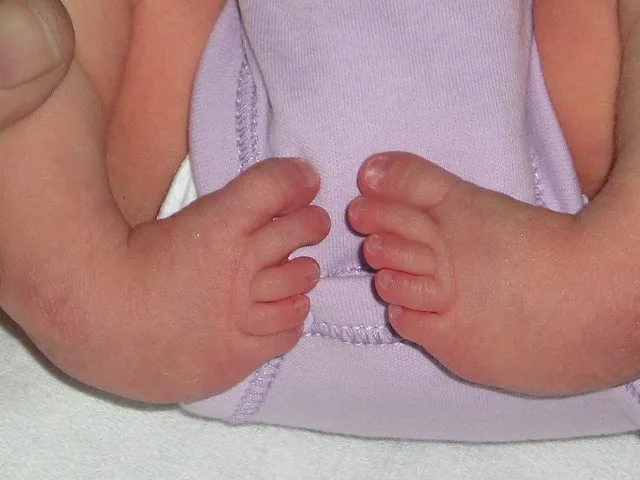
Foot deformities
Several rare EDS types are associated with differences in the shape or position of the feet, present from birth or developing over time. One example is club foot (talipes equinovarus), in which the foot is turned inward and downward. These differences arise from the lax connective tissue and altered muscle balance around the developing foot.
Multisystem abnormalities
Some rare EDS types, including spondylodysplastic EDS, can affect several body systems at once because connective tissue is present throughout the body. This can mean a combination of features involving the skeleton, skin, eyes, and other organs. The exact pattern differs between individuals and subtypes.
Skin abnormalities
Several rare EDS types involve changes in the skin, which may be soft, thin, stretchy, or fragile depending on the type. These reflect the central role of collagen and connective tissue in giving skin its strength and texture. The specific features vary between types and individuals.
Hyperopia
Hyperopia, or farsightedness, means that near objects appear blurred while distant ones are clearer. It is reported as a feature of spondylodysplastic EDS, where the shape and structure of the eye can be affected. It reflects the involvement of connective tissue in the eye.
Hypotonia
Hypotonia means reduced resting tension in the muscles, so the body can feel floppy and joints offer less natural resistance to movement. In infants it may be noticed as difficulty with head control or a loose, relaxed posture. It is a common early feature of several rare EDS types and can contribute to delays in reaching motor milestones.
Nephro/hydronephrosis
Nephropathy means disease affecting the kidneys, and hydronephrosis is swelling of a kidney when urine cannot drain away properly. These features are reported in spondylodysplastic EDS and reflect the involvement of the urinary system’s connective tissue. The degree of involvement varies between individuals.
Dental abnormalities
Some rare EDS types are associated with differences in the teeth, such as variations in their shape, structure, or enamel. These reflect the role of connective tissue in the development of the teeth and surrounding tissues. The specific findings differ between types and individuals.
Photos are illustrative examples of individual findings; appearance varies widely from person to person. This page is educational and is not a diagnostic tool — see our disclaimer.
Sources
Brady AF, Demirdas S, Fournel-Gigleux S, Ghali N, Giunta C, Kapferer-Seebacher I, et al. The Ehlers-Danlos syndromes, rare types. Am J Med Genet C Semin Med Genet. 2017;175(1):70-115.
Malfait F, Francomano C, Byers P, Belmont J, Berglund B, Black J, et al. The 2017 international classification of the Ehlers-Danlos syndromes. Am J Med Genet C Semin Med Genet. 2017;175(1):8-26.
Angwin C, Ghali N, et al. Ehlers-Danlos syndromes, rare types: Clinical and molecular review. Eur J Hum Genet. 2023;31(2):131-142.
Living with Spondylodysplastic EDS? You're not alone.
Join Our Community