Musculocontractural EDS
Last reviewed: 2026-06-09
Musculocontractural Ehlers-Danlos Syndrome (mcEDS) is a rare connective tissue disorder caused by changes in the CHST14 or DSE gene, which affect the dermatan sulfate that helps organize collagen. It is recognized at birth by multiple congenital contractures, especially of the fingers (adducted thumbs) and feet (clubfoot), together with distinctive craniofacial features. People with mcEDS often develop progressive spinal and foot deformities, fragile and stretchy skin, large subcutaneous hematomas, and eye involvement. mcEDS is inherited in an autosomal recessive pattern, so a person must inherit a change in both copies of the gene to be affected.
Genetics & Inheritance
CHST14 or DSE
Caused by mutations at specific locations in BOTH copies of CHST14 or DSE
Signs & Features of mcEDS
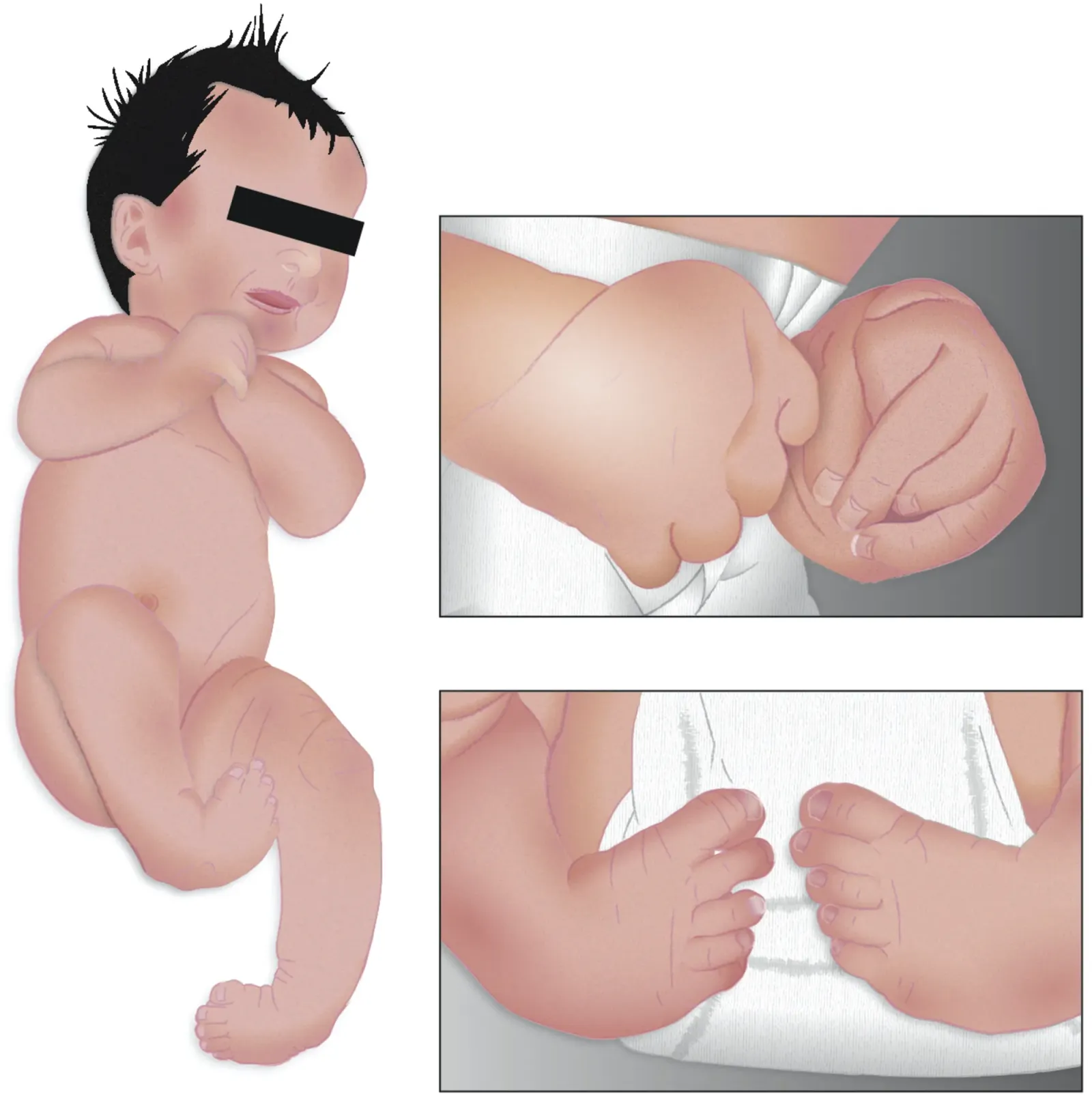
Congenital multiple contractures
Congenital multiple contractures are several joints that are fixed in a bent or stiff position from birth, limiting how far they can move. In musculocontractural EDS the hands and feet are characteristically affected, including inward-turned thumbs and club feet. The contractures reflect the altered connective tissue present from early development.
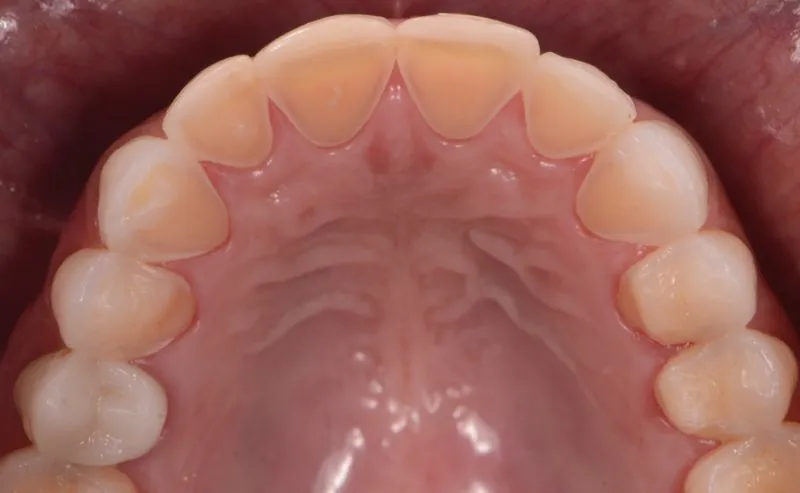
Palatal erosion
Palatal erosion is wearing away of the tooth surfaces that face the roof of the mouth (the palate). It is described in musculocontractural EDS and reflects the loss of the hard enamel and tissue on these inner tooth surfaces. It is one of several dental and oral features that can be seen in the rare EDS types.
Peculiar finger shapes
Musculocontractural EDS is associated with a distinctive appearance of the fingers and hands. These can include long, slender, and tapering fingers, and joints that are either unusually flexible or held in bent positions. The differences reflect the combination of contractures and lax tissue typical of this type.
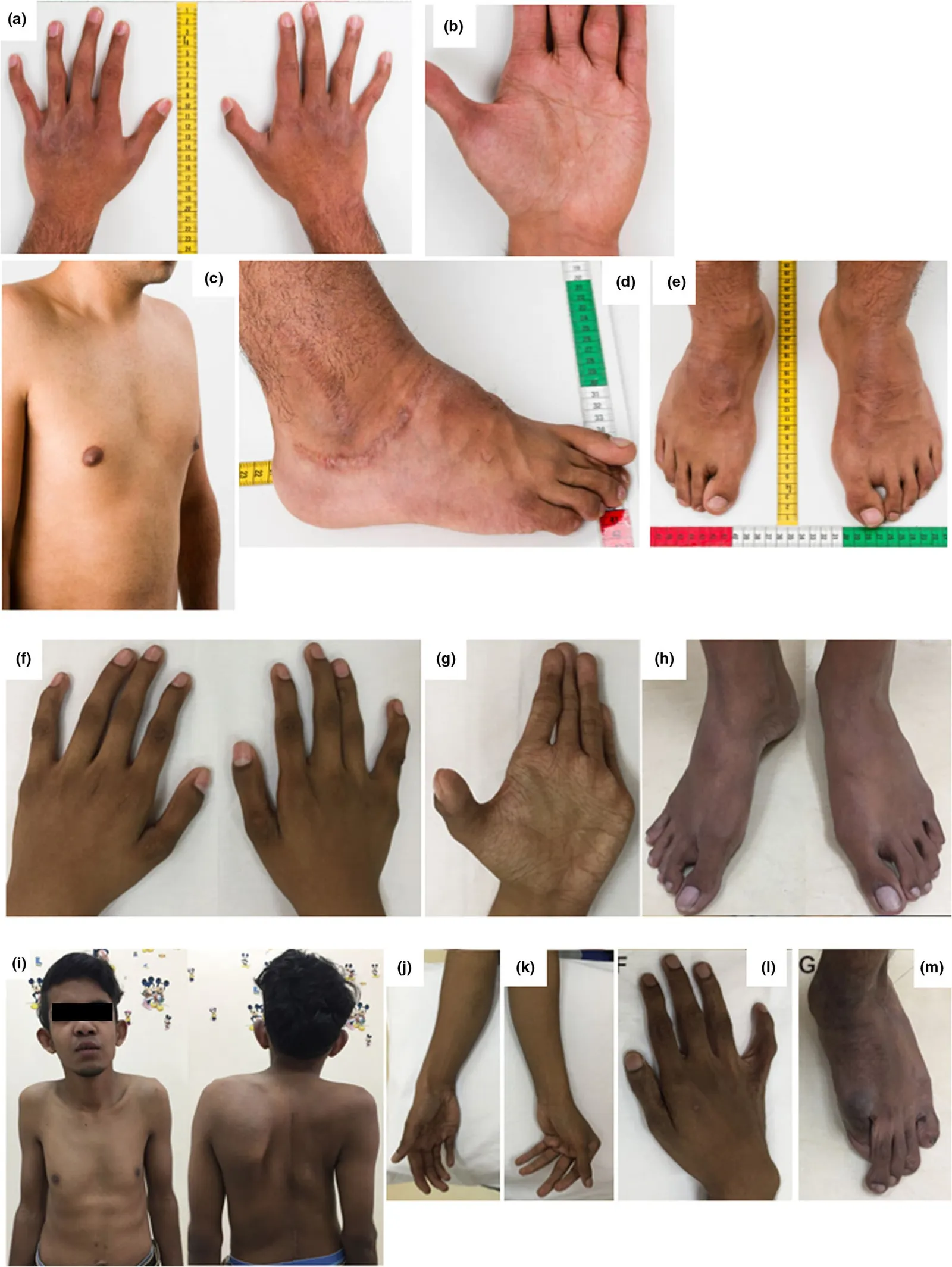
Progressive spinal and foot deformities
In musculocontractural EDS, curves of the spine and changes in the shape of the feet tend to develop and increase over time rather than staying fixed. This progression reflects the ongoing effect of lax connective tissue and altered muscle balance on the growing skeleton. The degree of change varies between individuals.
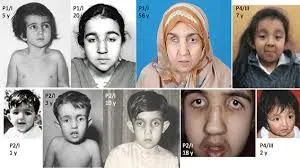
Craniofacial features
Musculocontractural EDS is associated with a recognizable set of facial features. These often include a large soft spot (fontanelle) in infancy, widely spaced eyes (hypertelorism), downward-slanting eye openings, a blue tint to the whites of the eyes, a short nose with a small central column (columella), and a small mouth and lower jaw. Together these create a characteristic appearance that varies between people.
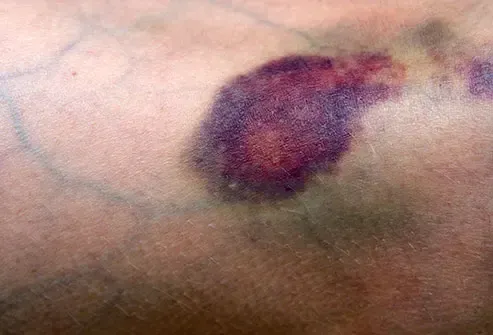
Large subcutaneous hematomas
A hematoma is a collection of blood that pools under the skin after a vessel is injured, forming a raised, often tender area. In musculocontractural EDS these can be large, because the small vessels and surrounding tissue are fragile. They reflect the easy bleeding seen in this type.
Eye involvement
Several rare EDS types can affect the eyes in various ways, reflecting the role connective tissue plays in their structure. This can include changes in the shape of the eye, the strength of its outer layers, or vision. The specific findings differ between types and individuals.
Photos are illustrative examples of individual findings; appearance varies widely from person to person. This page is educational and is not a diagnostic tool — see our disclaimer.
Sources
Brady AF, Demirdas S, Fournel-Gigleux S, Ghali N, Giunta C, Kapferer-Seebacher I, et al. The Ehlers-Danlos syndromes, rare types. Am J Med Genet C Semin Med Genet. 2017;175(1):70-115.
Malfait F, Francomano C, Byers P, Belmont J, Berglund B, Black J, et al. The 2017 international classification of the Ehlers-Danlos syndromes. Am J Med Genet C Semin Med Genet. 2017;175(1):8-26.
Angwin C, Ghali N, et al. Ehlers-Danlos syndromes, rare types: Clinical and molecular review. Eur J Hum Genet. 2023;31(2):131-142.
Living with Musculocontractural EDS? You're not alone.
Join Our Community