Cardiac-Valvular EDS
Last reviewed: 2026-06-09
Cardiac-Valvular Ehlers-Danlos Syndrome (cvEDS) is a very rare connective tissue disorder caused by changes in the COL1A2 gene that reduce or eliminate the pro-alpha2 chain of type I collagen. Its defining feature is severe, progressive heart valve disease — most often affecting the aortic and mitral valves — which can require surgical repair. People with cvEDS also typically have severe generalized joint hypermobility; loose, stretchy, thin-feeling skin; skin fragility with atrophic scarring; joint contractures; and easy bruising. cvEDS is inherited in an autosomal recessive pattern, so a person must inherit a change in both copies of the COL1A2 gene to be affected.
Genetics & Inheritance
COL1A2
Caused by mutations at specific locations in BOTH copies of COL1A2
Signs & Features of cvEDS
Severe cardiac valve abnormalities
The heart valves are flaps of connective tissue that keep blood flowing in one direction. In cardiac-valvular EDS these valves can become floppy or leaky over time because their supporting tissue is weakened, allowing blood to flow backwards. This valve involvement is the defining feature of the type.
Severe generalized joint hypermobility
Joints that move well beyond the normal range, affecting many joints throughout the body rather than just one or two. In the rare EDS types this is present from birth and is often severe, contributing to joint instability, pain, and frequent sprains.
Loose, stretchy, thin feeling skin
Hyperextensible skin stretches further than usual when pulled and then springs back into place, rather than staying loose. It reflects changes in the collagen that gives skin its strength and elasticity, and is a recognized feature across many of the EDS types. The degree of stretch varies from mild to pronounced.
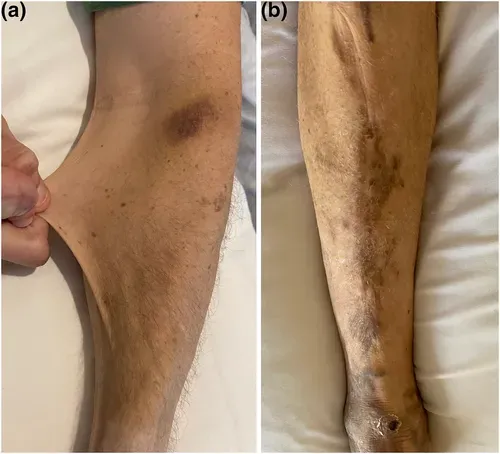
Skin fragility
Fragile skin tears, splits, or breaks more easily than usual, sometimes from minor knocks or friction. In several rare EDS types the skin is mechanically weak because its supporting collagen is altered, so wounds can be larger or deeper than the injury would suggest. This fragility also makes wounds harder to close and slower to heal.
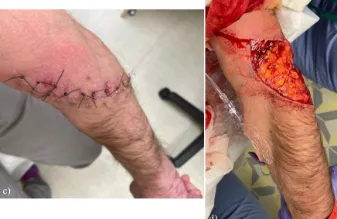
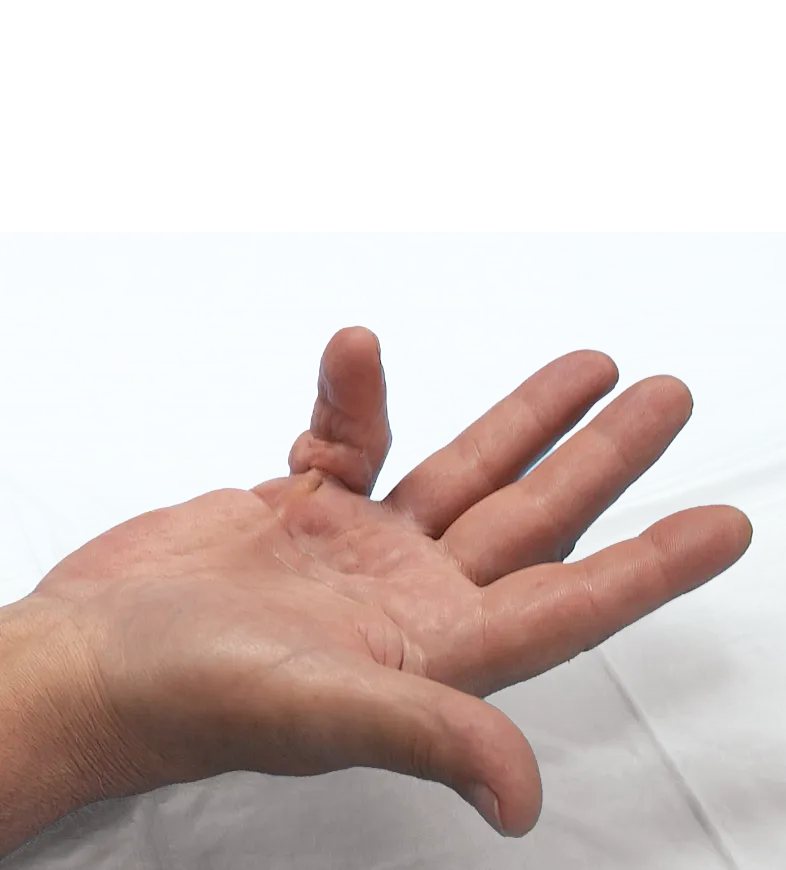
Joint contractures
A contracture is a joint that becomes fixed and cannot straighten or bend fully, because the surrounding tissues are tight or shortened. In some rare EDS types contractures are present from birth, while in others they develop over time. They can affect the fingers, hands, and larger joints, and may limit movement.
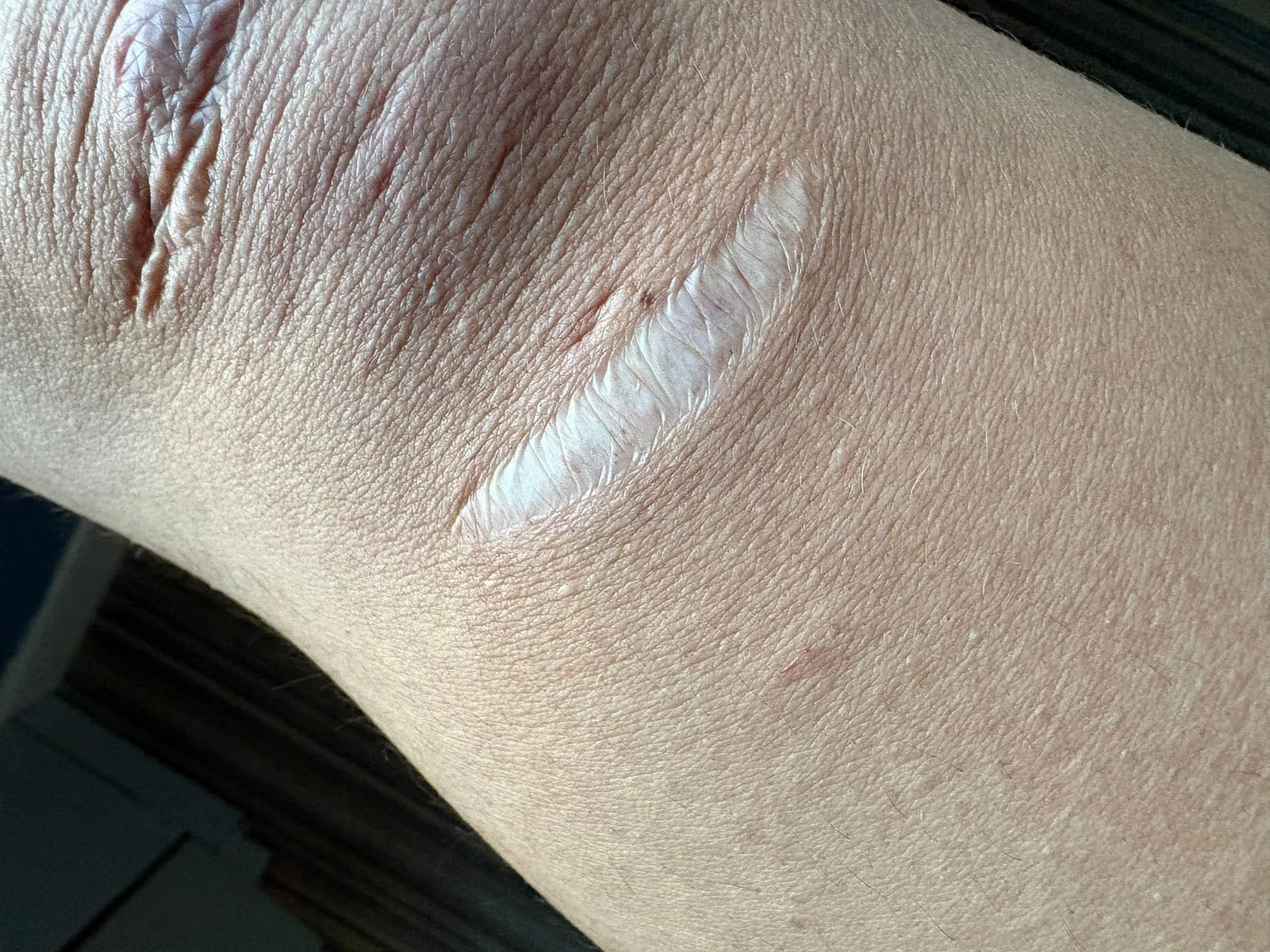
Atrophic scarring
Atrophic scars are wide, thin, sunken scars that form when fragile skin heals poorly after injury. In several rare EDS types, even minor wounds can leave papery, wrinkled scars — often compared to cigarette paper — most visibly over the forehead, knees, elbows, and shins.
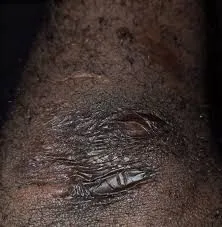
Easy bruising
Easy bruising means bruises appear after little or no remembered injury, and may be larger than expected. It happens because the small blood vessels and the connective tissue that supports them are fragile in many rare EDS types, so they leak more readily under the skin. Bruises may appear in unusual places or recur in the same areas.
Photos are illustrative examples of individual findings; appearance varies widely from person to person. This page is educational and is not a diagnostic tool — see our disclaimer.
Sources
Brady AF, Demirdas S, Fournel-Gigleux S, Ghali N, Giunta C, Kapferer-Seebacher I, et al. The Ehlers-Danlos syndromes, rare types. Am J Med Genet C Semin Med Genet. 2017;175(1):70-115.
Malfait F, Francomano C, Byers P, Belmont J, Berglund B, Black J, et al. The 2017 international classification of the Ehlers-Danlos syndromes. Am J Med Genet C Semin Med Genet. 2017;175(1):8-26.
Angwin C, Ghali N, et al. Ehlers-Danlos syndromes, rare types: Clinical and molecular review. Eur J Hum Genet. 2023;31(2):131-142.
Living with Cardiac-Valvular EDS? You're not alone.
Join Our Community