Classical-Like EDS
Last reviewed: 2026-06-09
Classical-Like Ehlers-Danlos Syndrome (clEDS) is a rare connective tissue disorder with two genetic forms: Type 1, caused by changes in the TNXB gene, and Type 2, caused by changes in the AEBP1 gene. It resembles Classical EDS but is distinguished by features such as stretchy, velvety skin and — in Type 1 — the absence of atrophic scarring. People with clEDS commonly have generalized joint hypermobility, easy bruising, and skin and vascular fragility, with Type 2 also associated with cardiovascular disease and reduced bone density. clEDS is inherited in an autosomal recessive pattern, so a person must inherit a change in both copies of the relevant gene to be affected.
Genetics & Inheritance
TNXB or AEBP1
Caused by mutations at specific locations in BOTH copies of TNXB (Type 1) or AEBP1 (Type 2)
Signs & Features of clEDS
Type 1 (TNXB)
Stretchy, velvety skin
Hyperextensible skin stretches further than usual when pulled and then springs back into place, rather than staying loose. It reflects changes in the collagen that gives skin its strength and elasticity, and is a recognized feature across many of the EDS types. The degree of stretch varies from mild to pronounced.
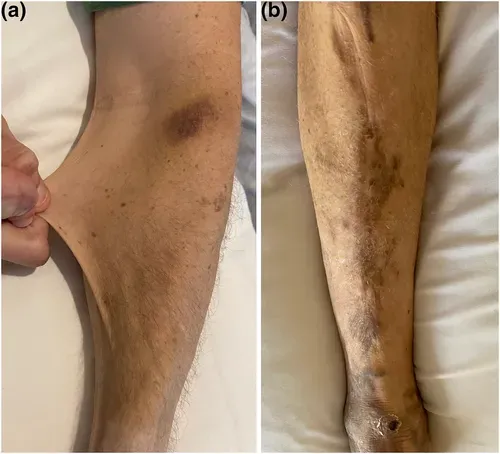
Absence of atrophic scarring
In classical-like EDS the skin is stretchy and bruises easily, but unlike classical EDS it typically heals without the wide, thin, sunken (atrophic) scars seen in other types. The lack of this kind of scarring is one of the features that helps distinguish this type. Wounds tend to heal in a more usual way.
Generalized joint hypermobility
Joints that move well beyond the normal range, affecting many joints throughout the body rather than just one or two. In the rare EDS types this is present from birth and is often severe, contributing to joint instability, pain, and frequent sprains.
Easy bruising
Easy bruising means bruises appear after little or no remembered injury, and may be larger than expected. It happens because the small blood vessels and the connective tissue that supports them are fragile in many rare EDS types, so they leak more readily under the skin. Bruises may appear in unusual places or recur in the same areas.
Hand and foot deformities
Some rare EDS types are associated with differences in the shape or positioning of the hands and feet, reflecting lax joints and altered connective tissue. These can include unusually flexible or curved fingers and toes, or changes in the arch and alignment of the feet. The pattern varies between people and types.
Muscle weakness
Muscle weakness means the muscles generate less force than expected, and atrophy means they are reduced in size. In several rare EDS types these features can appear in infancy or childhood and contribute to reduced stamina and difficulty with physical tasks. They reflect the involvement of connective tissue within and around muscle.
Axonal polyneuropathy
Polyneuropathy is a condition affecting many peripheral nerves at once, and the axonal form involves damage to the nerve fibers themselves. It can cause changes in sensation, such as numbness or tingling, and weakness, often beginning in the hands and feet. It is reported as a feature in classical-like EDS.
Gastrointestinal fragility
The walls of the digestive tract contain connective tissue that gives them strength. When that tissue is weakened, as in some rare EDS types, parts of the gut can become more fragile and prone to problems such as tearing. This fragility reflects the same connective tissue changes seen elsewhere in the body.
Vascular fragility
Vascular fragility means that blood vessels are weaker than usual because the connective tissue in their walls is altered. This can make them more prone to bruising, bleeding, or injury. It is a feature reported in several rare EDS types and varies in degree.
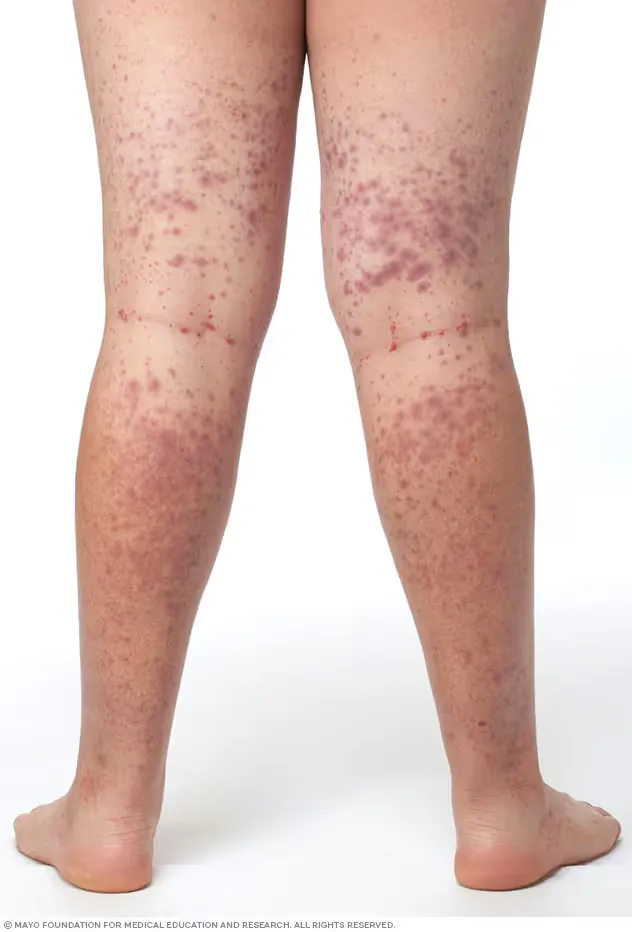
Purpura
Purpura describes purple or red spots and patches that appear when small blood vessels leak under the skin, and unlike a rash they do not fade when pressed. In rare EDS types the fragility of small vessels and their supporting tissue makes this leakage more likely. The marks can vary in size from pinpoints to larger blotches.
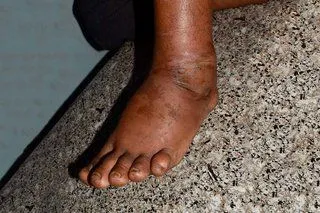
Edema
Edema is swelling caused by fluid building up in the body’s tissues, often noticed in the legs, ankles, or feet. It can occur in some rare EDS types where the connective tissue and small vessels that help manage fluid are affected. The swelling may come and go or vary through the day.
Type 2 (AEBP1)
Stretchy skin
Hyperextensible skin stretches further than usual when pulled and then springs back into place, rather than staying loose. It reflects changes in the collagen that gives skin its strength and elasticity, and is a recognized feature across many of the EDS types. The degree of stretch varies from mild to pronounced.
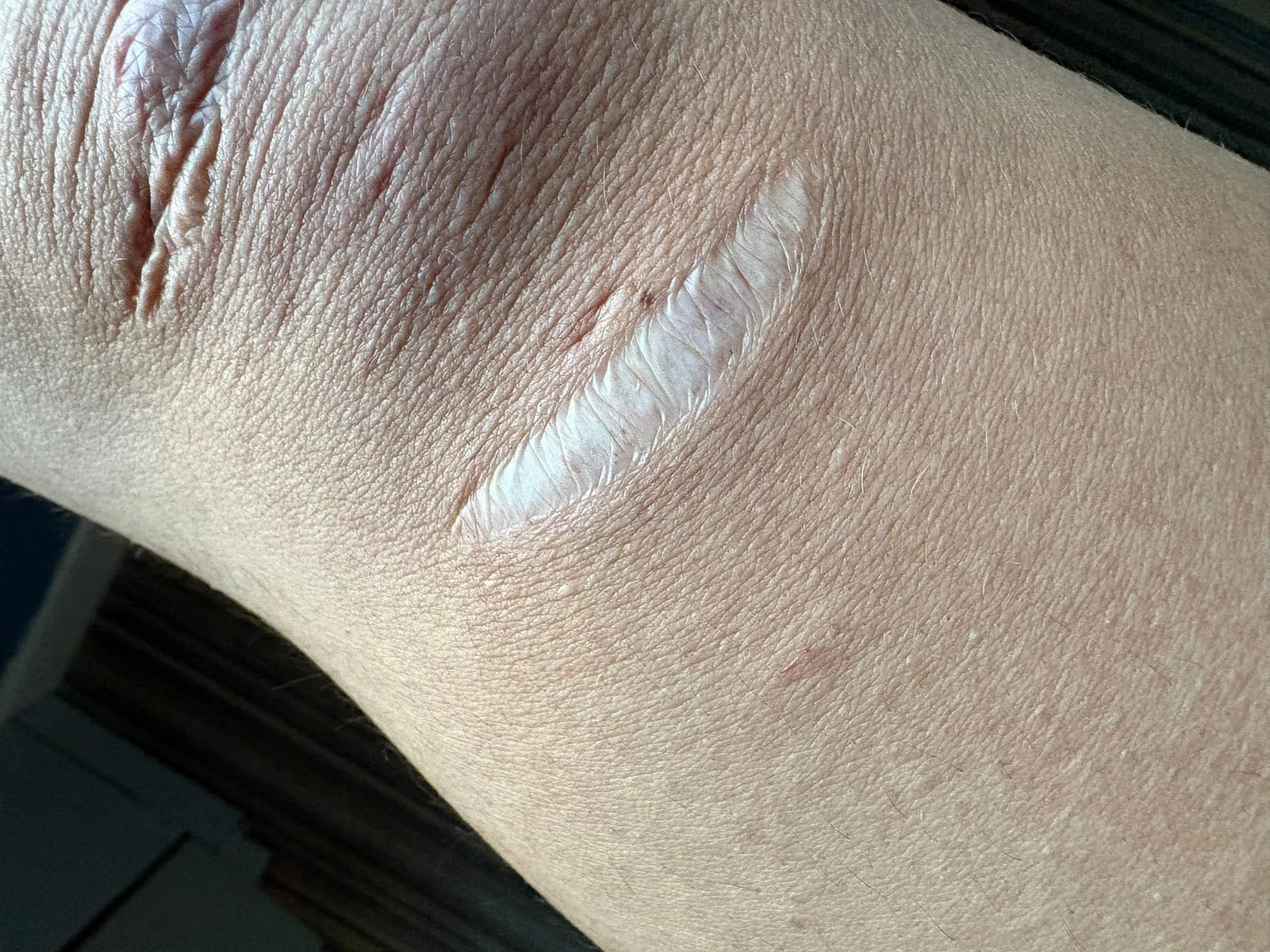
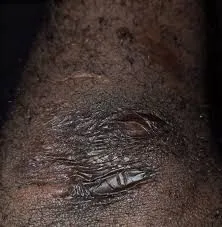
Atrophic scarring
Atrophic scars are wide, thin, sunken scars that form when fragile skin heals poorly after injury. In several rare EDS types, even minor wounds can leave papery, wrinkled scars — often compared to cigarette paper — most visibly over the forehead, knees, elbows, and shins.
Generalized joint hypermobility
Joints that move well beyond the normal range, affecting many joints throughout the body rather than just one or two. In the rare EDS types this is present from birth and is often severe, contributing to joint instability, pain, and frequent sprains.
Easy bruising
Easy bruising means bruises appear after little or no remembered injury, and may be larger than expected. It happens because the small blood vessels and the connective tissue that supports them are fragile in many rare EDS types, so they leak more readily under the skin. Bruises may appear in unusual places or recur in the same areas.
Cardiovascular disease
Cardiovascular disease refers to conditions affecting the heart and blood vessels. In some rare EDS types the connective tissue within the heart and vessel walls is altered, which can affect how they function over time. The nature and degree of involvement differ between people and types.
Hair loss
Some rare EDS types are associated with thinning or loss of hair. This is thought to relate to the connective tissue that supports the skin and hair follicles. The pattern and extent of hair loss vary between individuals.
Osteopenia
Osteopenia and osteoporosis describe bone that is less dense than usual, with osteoporosis being the more marked. Lower bone density makes bones more prone to fracture. These features are reported in several rare EDS types, reflecting the role connective tissue plays in maintaining bone strength.
Gastrointestinal features
Several rare EDS types are associated with a range of digestive symptoms. These can include problems with how food moves through the gut and, in some cases, weakness of the gut wall. They arise because connective tissue forms part of the structure and support of the digestive system.
Photos are illustrative examples of individual findings; appearance varies widely from person to person. This page is educational and is not a diagnostic tool — see our disclaimer.
Sources
Brady AF, Demirdas S, Fournel-Gigleux S, Ghali N, Giunta C, Kapferer-Seebacher I, et al. The Ehlers-Danlos syndromes, rare types. Am J Med Genet C Semin Med Genet. 2017;175(1):70-115.
Malfait F, Francomano C, Byers P, Belmont J, Berglund B, Black J, et al. The 2017 international classification of the Ehlers-Danlos syndromes. Am J Med Genet C Semin Med Genet. 2017;175(1):8-26.
Angwin C, Ghali N, et al. Ehlers-Danlos syndromes, rare types: Clinical and molecular review. Eur J Hum Genet. 2023;31(2):131-142.
Living with Classical-Like EDS? You're not alone.
Join Our Community